Petra Marešová: Science Must Not Be Detached from Reality, It Must Solve Real Problems
Author: Matyáš Strnad
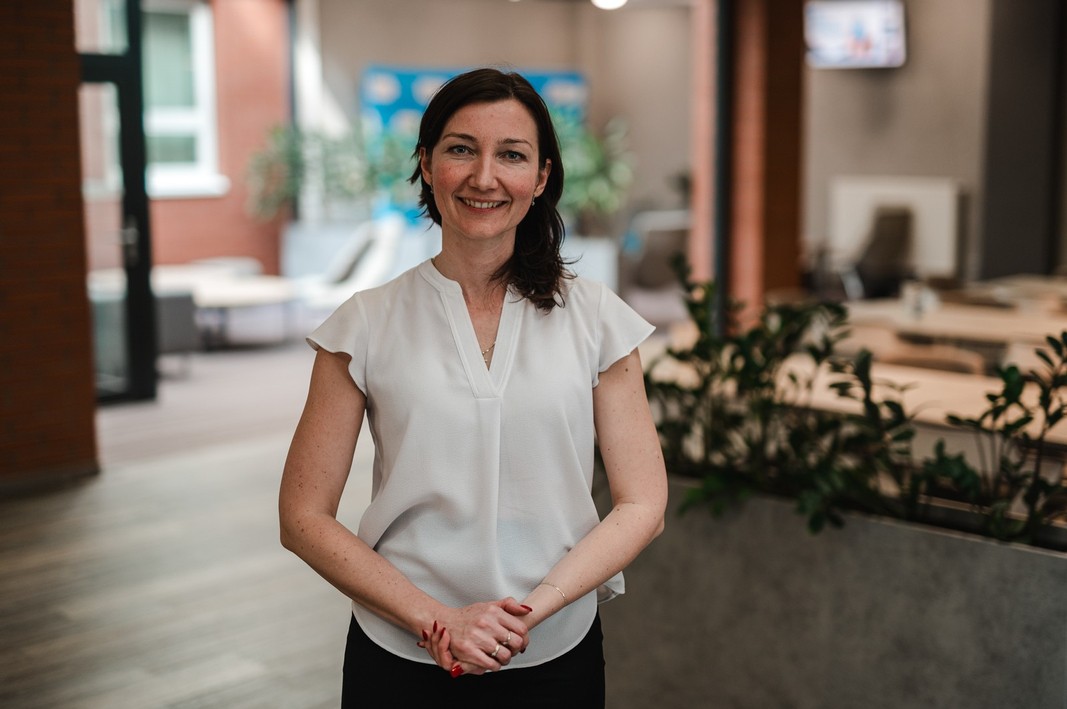
Imagine doctors creating your digital twin, a patient model identical to you, where combinations of medications can be tested in advance to determine their potential benefit or harm. This isn’t science fiction. Petra Marešová, Dean of the Faculty of Informatics and Management UHK (FIM UHK), is directly involved in such research. In this interview, she discusses the prestigious international project Dorian Gray, funded by Horizon Europe, her experience building a scientific career, and why she believes AI must still be supervised by humans.
DORIAN GRAY (Horizon Europe) is an international research project focused on diagnosing and preventing cognitive disorders in individuals with cardiovascular disease. It centers around the PORTRAIT platform, which models disease progression using digital twins, and the MIRROR application, which combines cognitive training with physical activity in a digital environment. The project contributes innovations in personalized medicine and healthy aging, aiming to improve the quality of life and reduce the burden on healthcare systems across Europe.
Petra Marešová is one of the lead researchers in the DORIAN GRAY project under Horizon Europe. What makes this project exceptional, she says, is its strong blend of scientific and clinical expertise, along with a clear focus on real societal impact.
"For me, it is truly important that science helps solve concrete problems and has a real, ideally measurable impact on improving the quality of life. That’s why I was pleased when Riccardo Proietti, the lead researcher from the University of Liverpool, praised our contribution: the models we developed in previous projects helped formulate a key part of the grant proposal. Specifically, the ‘impact’ section received full points, which is rare in such competition," says Marešová.
What is the main goal of Dorian Gray?
The project is designed for five years and began in January 2025. It involves twenty-five institutions, including the University of Cambridge and the University of Liverpool, and more than eighty experts from across Europe. We focus on patients suffering from a combination of two serious conditions: cardiovascular issues and mild cognitive impairment. These two areas are closely related, often leading to the development of dementia and increasing the burden on both patients and the healthcare system. Currently, 80% of patients with both cardiovascular disease and mild cognitive impairment remain undiagnosed.
The goal is early diagnosis and the development of a personalized digital twin of the patient, a model that simulates various scenarios of health development based on clinical and behavioral data. This avatar enables testing of interventions in advance, such as combinations of medications, exercise, or lifestyle changes, before applying them to a real person.
What role does your team at UHK play in the project?
Our task is to calculate the impact of the Dorian Gray solution on patients' quality of life, healthcare costs, and the burden on formal and informal caregivers. We evaluate scenarios: if we manage to delay the onset of dementia or keep a patient self-sufficient for longer, how much funding would be saved, how much time caregivers would save, and what the difference in treatment costs would be. All of this, of course, is tied to the new proposed solutions within the Dorian Gray project. Once we have clinical trial results from the project, we will update the analysis.
The project uses the so-called PORTRAIT platform. How does it work?
That is the avatar or digital twin mentioned. It’s a tool with multiple functions. It allows simulating treatment procedures and evaluating their effectiveness. During the research phase, patients provide real-time feedback on whether they followed the recommended regimen and how they feel, which is used to refine the models. The goal is maximum personalization of care.
What types of data do you use in your analysis?
We work with three main data pillars. The first are the primary results of clinical trials, which tell us whether the new solution works better than the current standard. The second pillar includes quality-of-life measures collected using standardized questionnaires, also within clinical trials. Patients subjectively evaluate how they feel before and after the intervention. The third pillar is economic data, how much the new intervention costs compared to standard treatment.
From these three components, we build a cost-effectiveness analysis, specifically a cost-utility analysis. If a solution turns out to be both more effective and cheaper, that’s the ideal scenario. More often, however, the solution is more effective but also more expensive. In that case, it is up to decision-makers to determine whether the benefit is sufficient given the additional cost and limited public resources.
The project focuses on lifestyle diseases. Is there another, similar one you consider a major challenge in terms of socio-economic impact?
It’s hard to pick just one area, but I consider the most demanding to be those health problems that show significant population growth. A typical example is obesity. On its own, it may not be fatal, but it is a key risk factor for a wide range of diseases, from type 2 diabetes and hypertension to lipid metabolism disorders and mechanical issues like joint pain. If we could reduce the incidence of obesity, the prevalence of cardiovascular and neurodegenerative diseases we track would very likely decrease, along with the overall burden on public finances. However, solving this isn’t easy and requires a long-term, coordinated approach.
Where do you get the comparative data, for example, for "standard treatment"?
We use secondary data from academic literature, medical databases, health insurance sources, international studies, and meta-analyses. "Standard treatment" is defined according to the current state-of-the-art, the best established and available procedures in a given field. It is essential to choose a suitable reference framework as selecting the wrong one would lead to misleading results.
What is the role of the private sector in the project?
Quite significant. Many Horizon Europe calls emphasize the implementation of results into practice. Therefore, consortia include large companies, such as tech or pharmaceutical firms, that have the capacity to further develop, test, and bring a prototype to market. Their participation also increases the chances of funding. The idea is clear: research should serve people, not remain in laboratories.
That is quite a standard approach in applied research, while basic research is set up differently. From your perspective, is one more important than the other?
Basic research is irreplaceable. It brings new perspectives, discovers principles, and creates theoretical frameworks on which applied research builds. Applied research, on the other hand, is closer to practice and enables faster transfer of results into the real world. From my point of view, public funds should support basic research more heavily because it has far less potential for commercial funding. Applied research can often naturally connect academia with the private sector, where it can find additional resources due to its market potential.
What is the current role of AI in research, in your opinion?
AI is already a very useful tool today, especially for processing large volumes of data. In our case, for example, we use it for automated document reading, extracting information from tables, or quickly navigating extensive datasets. However, it must be emphasized that AI outputs still require careful human oversight, as error rates can be high, especially with more complex data or context-sensitive information.
In the Dorian Gray project, AI plays a key role in creating the digital twin, placing even greater demands on transparency and verification at every step. So yes, AI helps us significantly, but always as a supporting technology, never as a fully autonomous tool.
You originally wanted to become a math teacher. How did your path shift toward economics and a scientific career?
Let’s start with the math... I realized already in elementary school that I was quite good at math, and unlike other subjects, I didn’t need to memorize as much. I actually enjoyed it. After high school, I pursued teaching and really did start out as a teacher at a secondary medical school, where I taught math and informatics. I chose to teach at the secondary level because I thought students there had a clearer idea of what they wanted to do. But in the end, I spent more energy just getting them to pay attention than actually teaching math. Teaching at that level is largely about trying to motivate kids to care about learning anything at all. So I found that I was more drawn to teaching adults, people who already have a motivation to study something they chose themselves. That brought me back to the university, first as a PhD student and then as an academic.
So you pursued your PhD specifically to teach at the university level?
Yes, exactly. I wanted to teach people who had some vision for their future careers. And I was lucky, right after starting my doctoral studies, I got the opportunity to teach. At first, I thought I’d be teaching math, but there was an opening in the economics department, and since I also had an economics background, I started there.
And if you were deciding again today, would you choose economics again?
Hard to say. Maybe I’d be braver now and try medicine, which has always fascinated me. Back then, I was afraid of it, afraid it would be too demanding, too much pressure, that I wouldn’t be able to handle it. But today I know my work touches medicine more than I ever expected. I research at the intersection of health, economics, and technology, so I’m actually very close to the kinds of issues doctors deal with.
As a researcher, you have a very high h-index. Is that an objective metric of scientific work?
Honestly, it’s a number that has some value, but it always needs to be seen in context. The h-index captures a certain aspect of scientific work, how often one’s publications are cited. But it doesn’t reflect the overall impact of research, its societal usefulness, or the quality of the team’s work. It’s just one perspective among many.
Still, when applying to international consortia or to European grants, the h-index is often one of the key points of reference. I don’t think it’s a perfect measure of a scientist’s quality, but within the system we operate in, it has its place and functions as one of the tools.
During your academic and professional path, you’ve studied at several universities. Which one do you remember most fondly and why?
My strongest connection is clearly with the University of Hradec Králové. I’ve spent the most time here and went through education at three of today’s faculties. I studied mathematics at the Faculty of Science, informatics at the Faculty of Informatics and Management, and took the didactics core at the Faculty of Education. Thanks to that, I was in contact with various disciplines and approaches, and UHK truly feels like my academic home.
I also have pleasant memories of studying at the Czech University of Life Sciences in Prague, where I did my master’s degree at the Faculty of Economics and Management. I commuted there once a month, so it was an intense weekend-style study. But both professionally and personally, I feel closest to UHK.
The topic of combining a family and an academic career is complex for many people. How have you managed it?
For me personally, it came quite naturally. I’ve always been fortunate with my environment. Working or studying at a university is very flexible, what matters is whether the work gets done. During my full-time doctoral studies, I had a one-year-old child, but I still managed to finish the degree within the standard four years. It’s true that if a long-term internship had been mandatory back then, it would have been a challenge I’d have had to find a solution for.
There’s more talk today about supporting female PhD students, such as setting up university childcare. What’s your take on that?
It’s an important topic. When my kids were little, there was talk of a university kindergarten, but it didn’t happen at the time. I think any kind of support with time management, such as help with childcare, is desirable. It would have helped me a lot back then. I had to arrange private babysitting or rely on my mother.
In the past, you were Vice-Rector and now serve as Dean. What do you think makes the Faculty of Informatics and Management UHK stand out compared to similar faculties in the Czech Republic or abroad?
I think our faculty is very flexible toward students, including in the content of study programs. We can respond quickly to student needs and also to specific situations of international students, for example, in recognizing credits or arranging mobility. At the same time, there’s a very individual and supportive approach here, which is clearly appreciated by students and external partners alike. We’re also successfully developing attractive academic programs, for example, cybersecurity within applied informatics, which is very popular and draws a lot of interest. It also reflects labor market demand.
How do you assess your time so far in the dean’s role? What has turned out to be surprisingly difficult, and what was easier than expected?
For me, the most difficult part was understanding the rhythm of the academic year and all its administrative and organizational phases. The processes are extensive and not always visible from the outside. On the other hand, it was a very pleasant surprise how constructive and supportive the faculty colleagues are, whether department heads, program coordinators, or supervisors. It’s a joy to talk with them; we always find common ground. That allows me to implement changes, dare I say, without conflict, because they result from joint discussion.
It may be early, but will you run for a second term as dean?
That’s a question I surprisingly get asked a lot during my first year in office. But right now, I’m focusing on the present to fulfill what I planned for this term. Ask me again in the third year of my mandate.
One of the factors in your successful candidacy was your ability to connect the faculty with the private sector. Has that vision been realized?
We’re already seeing the first results. We established the Center for Academic-Industry Cooperation (CAPS), which serves as a platform for contract research and systematizing relationships with companies. So far, we’ve signed contracts worth around three-quarters of a million CZK, which I consider a success. We’re also working on continuing education to make sure we offer the public content they’re genuinely interested in. Special focus is on AI. So we’ve had some early successes, and now our goal is to further develop this collaboration, systematize it, and offer companies clearly structured services.
And how does connecting students and companies work? Do companies ever “poach” young talent from the faculty?
Yes, that does happen, but it’s not necessarily a bad thing. Especially in IT, companies start hiring students during their bachelor’s or master’s studies. What matters to us is that the cooperation is mutually beneficial, that companies, beyond hiring students, also tap into our academic expertise, for instance, through contract research.
One example is our collaboration with the company Freudenberg, for which we provided model data to optimize warehouse space. This helped the company precisely define the specifications for a large software solution. That kind of connection makes sense. When our students are involved in companies, they bring knowledge of the faculty environment and an awareness of the methods and tools we can offer.
Can students participate in research collaboration during their studies?
Absolutely! And they do. They work under the supervision of experienced academics, are responsible for specific parts of research tasks, present results, and ideally, a long-term relationship grows from that. The company gets to try out the student and may later hire them after graduation. It’s a win-win. But we make sure that students always have expert guidance on larger projects, that’s essential.
If a student has a research idea or wants to collaborate with a company, whom should they contact?
Students can reach out to me or to any academic they are in contact with. But the best place is the office or email of the Vice-Dean for Research, Professor Vladimír Bureš. He is in charge of the CAPS center and the Center for Basic and Applied Research (CZAV). Based on the idea or collaboration type, he can direct students to the right experts or research teams.
Our goal is to create an environment where students aren’t afraid to bring forward ideas and have a clear path for developing them. That’s why we’re setting up processes that foster interest in research, entrepreneurship, and industry collaboration.
So, something like a university incubator?
At our faculty, it’s more about helping identify potential early, offering support, connecting students with legal and administrative backing, and guiding them to experts or institutions that can take their project further. We’re already in contact with the Centre for Investment, Development and Innovation and other partners who provide exactly the kind of follow-up support we could call an incubator. I want students to feel it’s natural to take their first steps toward business success right here with us.

Prof. Ing. Mgr. Petra Marešová, Ph.D.
Prof. Petra Marešová was born in Hradec Králové. She studied economics and management in Prague, math and informatics education in Hradec Králové, and completed her PhD in systems engineering there as well. She earned her habilitation at Mendel University in Brno and completed her professorship at the Technical University of Liberec. She has worked at the University of Hradec Králové since 2009, focusing mainly on economics and management. Her academic interests include healthcare, sectoral economics, and methods for evaluating investment efficiency. In her free time, she enjoys being with her family, exercising, or reading a “normal, non-scientific” book. She is married and has three children.
Section navigation: Topics